
|
| You might also like: | Karakul Sheep Printout | Loris Printout | Fossa Printout | Whippet Printout | Pronghorn Printout | Today's featured page: Timeline: US Constitution |
| Our subscribers' grade-level estimate for this page: 3rd - 4th |
| All About Mammals | Alpaca | Animal Printouts Label Me! Printouts |
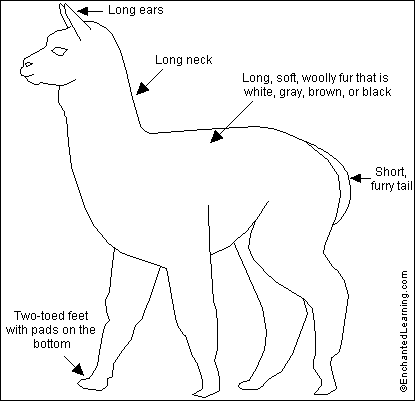
Alpacas have a life span of about 15 - 20+ years. Some alpacas make a humming sound; whining, grumbling, clucking, and other assorted sounds are used by alpacas to communicate. Spitting is used by alpacas, probably as a sign of dominance, fear, or a warning to intruders.
Anatomy: The alpaca has a relatively small head, a cleft (split) upper lip, a long neck, and large, pointed ears. The tail is short. Alpacas have long, thick, very soft hair that ranges in color from white to gray to brown to black. Alpaca have two-toed feet with toenails on the top and with pads on the bottom; they do not have hooves. The average adult alpaca weighs about 120-140 pounds and is 3-3.5 feet tall at the shoulders.
Diet: Alpaca are herbivores (plant-eaters). They eat mostly grasses, herbs, and other plant material. Alpaca are ruminants and have a three-part stomach. They partially chew their food; later, the food is regurgitated as a cud, which the alpaca then chews thoroughly.
Enemies: Pumas and other large carnivores (meat-eaters) prey on the alpaca.
Classification: Class Mammalia (mammals), Order Artiodactyla, Suborder Tylopoda, Family Camelidae, Genus Lama, Species L. pacos.
| Search the Enchanted Learning website for: |