
|
| You might also like: | Cephalopod Printouts | Label Squid Diagram | Animal Coloring pages: Sp-Sq | Harbor Seal Printout | Pinniped Printouts | Today's featured page: Drawing and Adding Fractions, Printable Worksheets |
| Squid Label Me! Printout | EnchantedLearning.com |
Animal Printouts Label Me! Printouts |
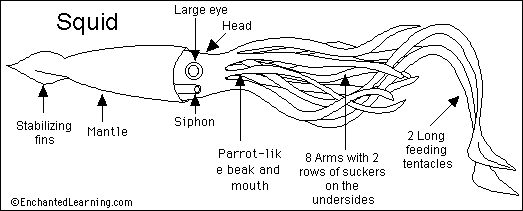
Squid are soft-bodied cephalopods. They move by squirting water from the mantle through the siphon, using a type of jet propulsion. When in danger, squid squirt a cloud of dark ink in order to confuse their attacker and allow the squid to escape. Squid reproduce by releasing eggs into the water. Some squid eggs are free-floating, others are attached to seaweed or to the ocean floor.
Anatomy: Squid range from 1 to 60 ft (0.3 to 18 m) long. The biggest squid is the Giant Squid (Architeuthis). Squid have a large mantle/head (with a large brain), eight arms with suckers, two longer feeding tentacles, a beak, a large head, two large eyes, and two hearts. Their large eyes are very similar in structure to people's eyes. They breathe using gills.
Diet: Squid eat fish, crustaceans (like shrimp), and other squid. These fast-moving carnivores (meat-eaters) catch prey with their two feeding tentacles, then hold the prey with the eight arms and bite it into small pieces using a parrot-like beak. The esophagus runs through the brain, so the food must be in small pieces before swallowing.
Predators: Many animals prey upon squid, including many sharks and other fish, some whales, squid, and people.
Classification: Kingdom Animalia, Phylum Mollusca, Class Cephalopoda, Order Teuthoidea, Families Loliginidae, Sepiolidae, and Architeuthidae.
| Search the Enchanted Learning website for: |